

“Operate in code” turns how teams ship, govern, and stay reliable into versioned, testable, auditable artifacts—so autonomy scales without chaos. Here’s the practical playbook: paved roads, guardrails-as-code, evidence on demand, and a metrics loop that keeps production healthy.

You Build It, You Run It—Without Burnout: The AutonomyAI Blueprint for Accountable Product Teams
“You build it, you run it” can create faster feedback loops and better software—until it becomes a tax paid in after-hours pages and constant anxiety. Here’s how to make ownership real and sustainable: clear boundaries, paved roads, SLOs, incident automation, and guardrails that protect both customers and teams.

AI Governance for Software Teams: How AutonomyAI Enables Speed With Accountability
AI is now part of the delivery system—not a side tool. The fastest teams aren’t the ones using the most AI; they’re the ones governing it well. This guide breaks down an AI governance model that preserves speed while improving accountability, review rigor, and auditability across the software lifecycle.

AI-Assisted Software Development: How AutonomyAI Helps Teams Ship Faster Without Sacrificing Quality
AI-assisted software development can compress cycle time dramatically—but only if you treat it as a delivery system, not a typing accelerator. This guide explains where AI reliably speeds execution, where it increases risk, and the guardrails AutonomyAI-style workflows use to ship faster without sacrificing quality.

Stable Priorities: The Most Underrated Lever for Faster Software Delivery
Delivery speed collapses when priorities change faster than teams can finish work. Stable priorities don’t mean rigidity—they mean clear decision rules, WIP discipline, and an operating rhythm that protects flow. This article explains how to create stability without slowing responsiveness, and how AutonomyAI helps teams reduce thrash by moving work to done faster.

An End of Year Reflection and a Look Ahead with Fei Studio
As the year comes to an end, I want to take a moment to reflect on what we built at AutonomyAI and, more importantly, where we believe software creation is headed. This year was about proving a thesis. In just six…

Cross-Functional Collaboration: How Product, Engineering, and Ops Ship Faster Together
Speed isn’t a coding problem—it’s a coordination problem. The fastest teams don’t rely on heroics; they reduce handoffs, clarify ownership, and standardize evidence so decisions happen quickly. This guide lays out a practical cross-functional operating model and shows how AutonomyAI reduces coordination load by turning intent into validated PRs and release-ready artifacts.

Shift-Left Security: How to Catch Vulnerabilities Before They Reach Production
Shift-left security isn’t about adding more gates—it’s about moving the right checks earlier, automating them, and turning fixes into fast feedback loops. This guide shows how modern teams embed security into PRs, use policy-as-code to keep flow moving, and use agentic automation like AutonomyAI to remediate findings faster without sacrificing delivery speed.

Developer Experience (DevEx): The Fastest Way to Improve Delivery Speed Without Hiring More Engineers
Developer Experience isn’t a perk; it’s infrastructure. When teams invest in faster feedback loops, self-service, and reduced cognitive load, they ship more reliably with less burnout. This guide shows what DevEx really means, how to improve it in measurable ways, and where agentic automation like AutonomyAI compounds the gains.
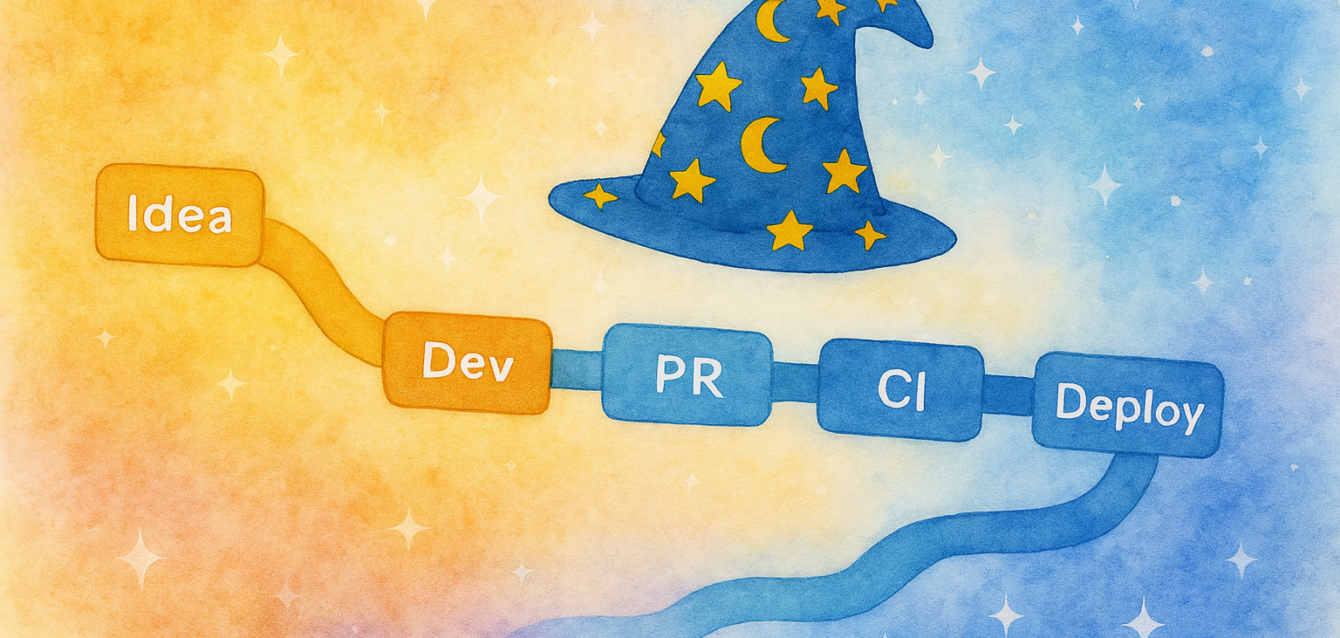
Value Stream Management (VSM): Measure Flow, Fix Bottlenecks, and Ship Software Faster
If software delivery feels slow, the code is rarely the problem—waiting is. Value Stream Management (VSM) gives engineering and product leaders a practical way to see where work stalls, quantify flow, and remove constraints. Done well, VSM turns delivery speed into a measurable system—and makes AI automation like AutonomyAI far more effective.