AI agents do not fail because models are weak. They fail because workflows are loose.
The Shift From Intelligence to Systems
Most teams still buy AI capability like they buy compute. Bigger model, better outcome. That logic breaks the moment work becomes multi step.
Shipping real software is not a single prediction problem. It is a sequence of decisions under constraints. Planning, editing, testing, debugging, and coordinating across files. Each step compounds error.
This is where raw model intelligence stops being the bottleneck. The limiting factor becomes system design.
The highest performing teams are not using dramatically better models. They are using tighter loops, stronger constraints, and better tooling.
Task Decomposition Is the Real Engine
Every reliable agent starts by breaking work into smaller pieces. Not as a convenience. As a necessity.
A request like “add authentication” is too broad. Strong systems translate that into ordered steps. Define schema. Add endpoints. Update UI. Write tests. Validate flows.
When decomposition is weak, everything downstream degrades. You get partial implementations, mismatched interfaces, and silent logic errors.
When decomposition is strong, execution becomes predictable. Each step has a clear input and output. Failures are isolated. Recovery is possible.
This is why hierarchical planning and structured reasoning outperform free form prompting. They reduce ambiguity before execution even begins.
The Execution Loop Is Where Work Actually Happens
Agents do not succeed by generating code. They succeed by iterating.
The core loop is simple. Plan. Act. Observe. Update.
In practice, this looks like generating a change, running tests, reading errors, applying a patch, and repeating. Over and over.
This loop is not optional. It is the entire mechanism of progress.
Teams that treat AI as a one shot generator see brittle results. Teams that build tight execution loops see compounding gains.
The difference is not subtle. It is the difference between demo quality and production reliability.
Tooling Beats Intelligence
The most underrated insight in this space is that tool reliability often matters more than model quality.
An agent with perfect access to a codebase, a deterministic test runner, and clean diff editing will outperform a stronger model operating in a vague environment.
Real work requires interaction with systems. File systems, APIs, linters, type checkers, browsers.
Agents are not replacing these tools. They are orchestrating them.
When tools are flaky, outputs become unpredictable. When tools are deterministic, the agent can converge on correct behavior.
This shifts budget allocation. Less spend on model upgrades. More investment in infrastructure and tool integration.
Code Generation Is Iterative by Default
No experienced engineer expects correct code on the first try. Agents are no different.
The real workflow is generate, run, fail, debug, patch, repeat.
What separates strong systems is how they handle failure. Can the agent read a stack trace and localize the issue? Can it apply a minimal change instead of rewriting entire files?
Diff based editing consistently outperforms full regeneration. It preserves working logic and reduces unintended side effects.
This mirrors human behavior. Engineers rarely rewrite everything. They make targeted fixes.
Verification Is Not Optional
Without validation, errors compound silently.
Every step in an agent workflow needs a check. Unit tests. Type checks. Linting. Runtime execution.
This creates a feedback signal. Pass or fail. Continue or repair.
Systems that skip verification move faster at first. Then collapse under accumulated errors.
Systems with strong validation loops appear slower but converge reliably.
In production environments, reliability always wins.
State Management Is the Hidden Bottleneck
Agents are not just generating outputs. They are managing state.
What has been completed. What depends on what. What failed. What needs retry.
When state tracking breaks, agents lose context. They repeat work, overwrite correct code, or drift from the goal.
Strong systems externalize state. Structured objects, checkpoints, and memory layers.
This allows rollback, retry, and consistent reasoning across steps.
Most failures that look like “model issues” are actually state failures.
Context Grounding Determines Usability
Generated code that ignores the existing system is unusable.
Agents need to align with real constraints. Naming conventions, component libraries, existing patterns.
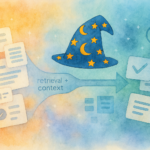
This is where retrieval becomes critical. Before each step, the agent pulls relevant files and context.
If retrieval is weak, outputs become inconsistent. If retrieval is strong, outputs feel native to the codebase.
This is the difference between something that compiles and something that ships.
Multi File Work Is Where Systems Break
Single file edits are easy. Real systems are not.
Updating one component often requires changes across multiple files. Imports, shared logic, interfaces.
Without dependency awareness, agents introduce breaking changes.
Advanced systems build internal maps of relationships. What depends on what. What will break if changed.
This enables safer edits and reduces regression risk.
Planning vs Reacting Is a False Choice
There is a common debate between upfront planning and step by step execution.
In practice, the best systems use both.
They start with a rough plan to reduce ambiguity. Then adapt as new information appears during execution.
Pure planning fails because reality changes. Pure reactivity fails because there is no structure.
The hybrid approach mirrors how experienced engineers operate.
Why Long Tasks Still Fail
Performance drops as task length increases.
Errors accumulate. Context drifts. Small mistakes compound into larger failures.
This is not a temporary limitation. It is a structural property of sequential systems.
The solution is not bigger models. It is better segmentation.
Break work into isolated units. Re ground frequently. Validate often.
Reduce the length of dependency chains wherever possible.
The Role of Humans Is Not Going Away
Agents struggle with ambiguity. Product decisions, edge cases, undefined requirements.
Humans still provide direction and judgment.
The highest leverage pattern is not full automation. It is guided autonomy.
Agents execute within constraints. Humans set those constraints and review outcomes.
This reduces cognitive load without removing control.
Market Reality: Where Agents Actually Win
Agents perform best in constrained environments.
Frontend systems with defined components. Backends with clear interfaces. Codebases with strong tests.
They struggle in open ended refactors and poorly defined tasks.
This has direct implications for adoption.
Buyers are not looking for general intelligence. They are buying reliability within specific workflows.
Vendors that position agents as universal developers face churn. Vendors that focus on narrow, high value tasks see retention.
Architecture Is Becoming the Product
The leading systems are not single agents. They are coordinated architectures.
A planner generates tasks. Executors perform them. Specialized agents handle testing, editing, and validation.
A central orchestrator manages state, retries, and flow control.
This looks less like a chatbot and more like a pipeline.
As these systems mature, differentiation shifts from model quality to system design.
The Economic Shift
This changes how budgets are allocated.
Spend moves away from raw model access and toward infrastructure. Tooling. Integration. Validation systems.
The ROI comes from reducing iteration cycles and human intervention.
Teams that understand this build compounding advantage. Teams that do not remain stuck in prototype mode.
The Bottom Line
AI agents are not magic. They are structured search systems operating under constraints.
The winning approach is not more intelligence. It is less ambiguity.
Clear plans. Deterministic tools. Tight feedback loops. Strong validation.
That is how prompts turn into production.