Ten questions we’ve been asked most since launch. More than 170 product teams run on AutonomyAI today; these are the answers we give them.
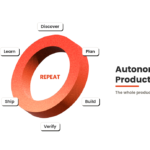
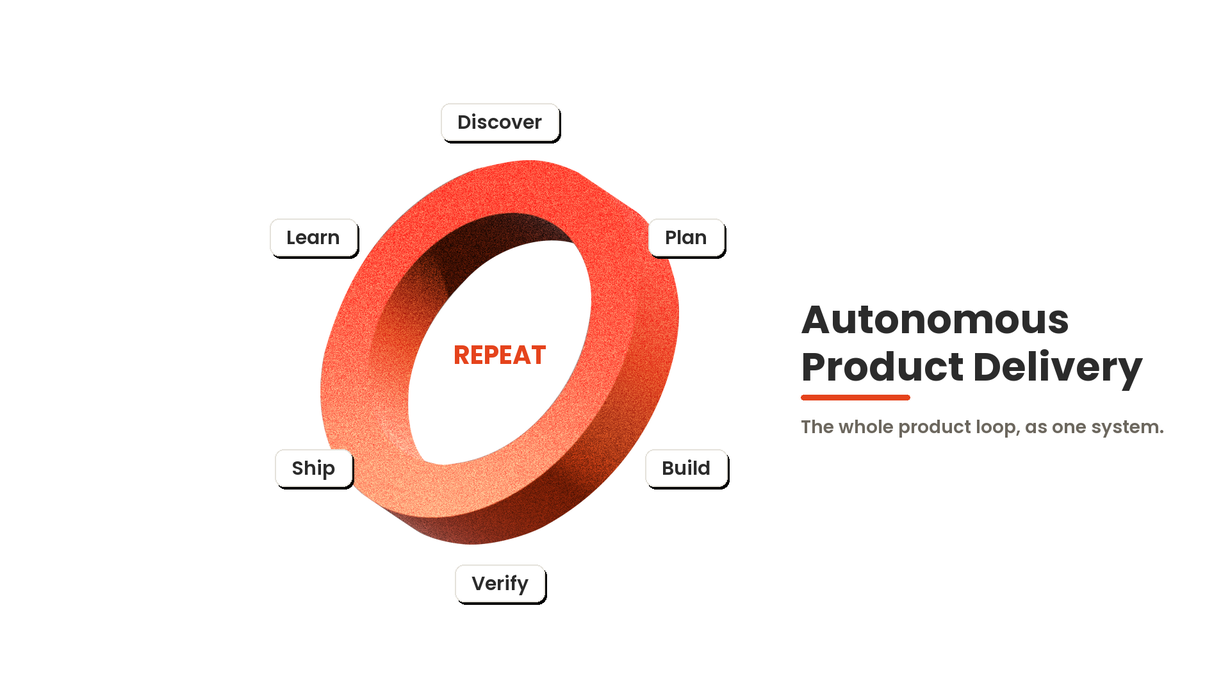
It’s the whole product loop, from a question about your customers to a merged pull request, running as one system on your own codebase. Product teams run it. Engineers review and merge. Every merge makes the next one faster and safer.
A coding tool speeds up one seat: writing code. The slow part of shipping an improvement is everything around that seat. Deciding what to build, turning it into a spec, checking it works, getting it reviewed, learning what happened after. Those steps live in different tools and different teams, and context dies at every handoff. Autonomous Product Delivery carries the work through all of them as one system, so nothing gets re-explained and something owns the outcome.
It stops being a waiting list. Your product team works it down themselves, and the items that used to sit a quarter for an engineer show up as pull requests instead. The roadmap holds, the backlog shrinks, and the features that matter ship.
It starts with a question, like “why did activation drop after the UX change?” Discover Mode researches it across your analytics, support tickets, customer calls and the codebase, and comes back with a brief: what it found, the evidence, and suggested next steps. Plan Mode turns the brief into a spec mapped to your actual architecture. Build Mode writes the change with your components and conventions, boots your app, renders the real UI, checks the result, and opens a pull request. Your engineers review and merge. Then the next question.
Both. You can ask a hard question any time. Discover Mode also watches the product on its own and arrives with the next improvement already researched, scoped, and ready to build. You decide whether to take it.
No. Engineers approve every merge. The system opens pull requests in the same queue your team already uses, in your team’s standards, and nothing reaches production that an engineer didn’t review. Full autonomy is where this is heading; verified delivery is how we earn it.
The merge button is the metric. Our own product manager has shipped more than 50 pull requests into our production codebase, with roughly 70 percent merged by our engineers, none of it written by her. The number we track internally is the one-shot merge: a PR an engineer approves with no comments. Every comment an engineer leaves is a lesson the system takes into the next turn.
Every merged PR teaches the harness more about your codebase: which components are load-bearing, what your tests expect, how your reviewers think. So the hundred-and-first pull request is faster and safer than the hundredth. A ticket queue only grows. This gets better the more you use it.
Existing codebases are the point. The proof we care about is a merged PR on a ten-year-old codebase nobody wants to touch. The Product Harness is built inside your production codebase and learns how your product is already written: your components, design tokens, architecture, and how your engineers expect a pull request to look. Then it produces changes that fit.
No. It moves them from the start of the process to the end. Instead of receiving a ticket and building from scratch, they receive a pull request and decide whether it merges. The judgment stays with them; the busy work doesn’t.
Book a demo and bring a real question about your product. We’ll run one turn of the loop on your codebase, from that question to a pull request, and you’ll see how your engineers react to it. That reaction is the whole test.
New here? Start with the launch post