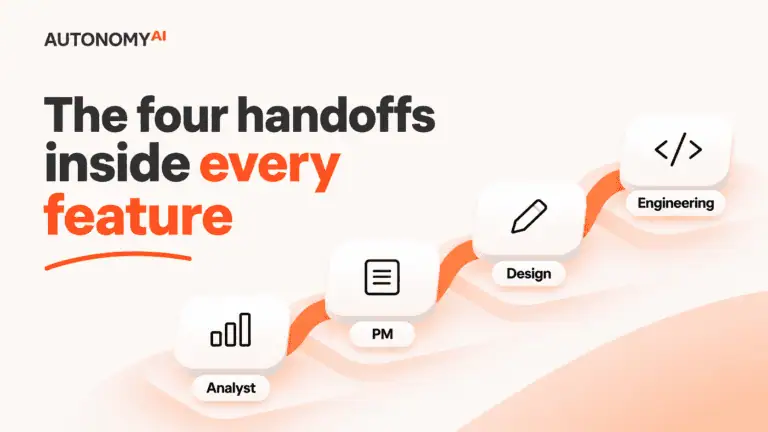
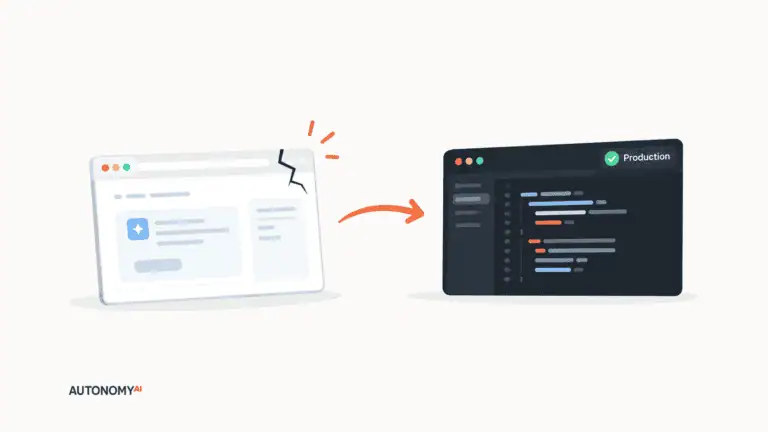
Product handoffs are where small fixes often stall. Follow one fix from analyst to PM, designer and engineer, and see what changes when each step reads your code.
Built something in Lovable and can't get it into your real product? Here are 8 alternatives that work with the codebase you already have.
A system of AI agents that takes a change a product manager describes and carries it to a pull request on your real codebase. Where the term comes from, how it works, and five questions to ask before you buy one.
Trackers are where bugs go to be remembered. Here's how a PM takes a ticket from Linear to a pull request the same day, with engineers still approving.
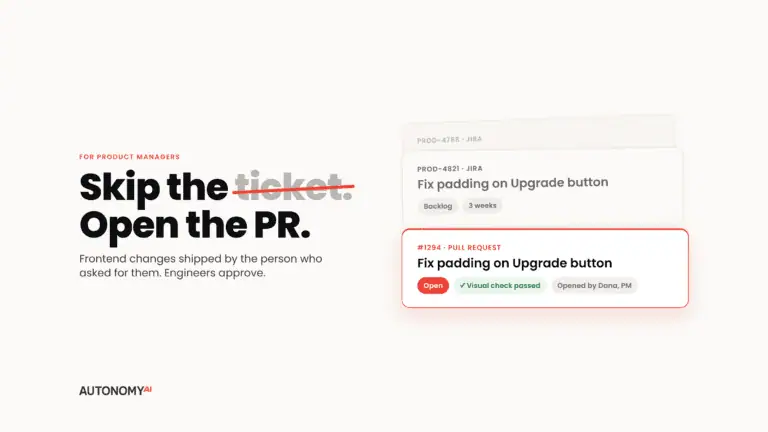
PMs and designers at mid-market SaaS companies wait weeks for frontend changes. Here's how they open the pull request themselves and engineers just approve.

Seven short clips with Tammuz Dubnov on why the loop had to be one system, who decides, and why building it yourself is the slow way there.

The tools worked. Code gets written faster. The backlog didn't move. Here's where the velocity went, and a three-question audit you can run on your own org in an afternoon.

Five unscripted moments with James Touhey, Head of Design at AnyTeam: the mechanism, the craft it protects, and why building first gets designs approved.

Per-seat pricing made sense when the tool was a daily workspace. For a PM who ships a few changes a month, it's a tax on access. Three questions to ask instead.

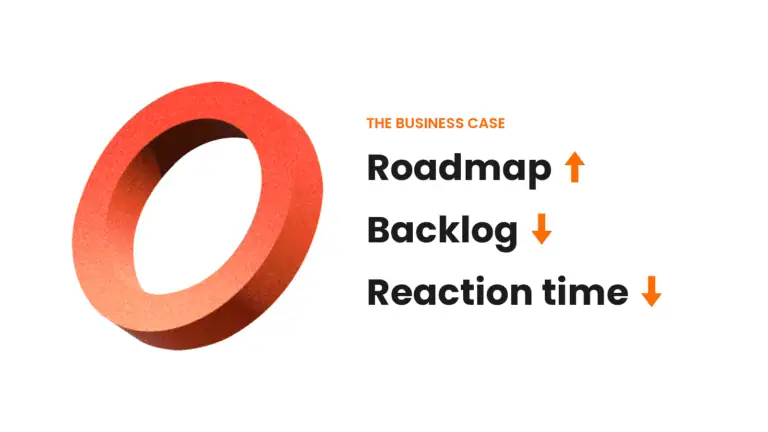
The three numbers every CEO watches, and what the loop does to each.

Ten questions we've been asked most since launch, answered plainly.
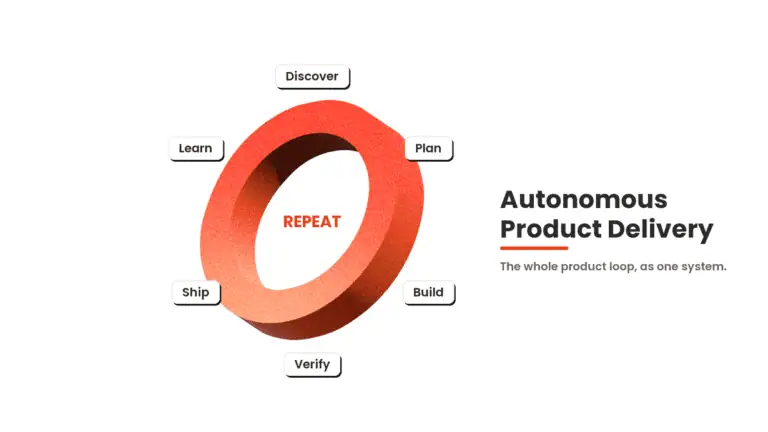
The whole product loop, from discovery to a merged production PR, as one system that compounds with every merge.
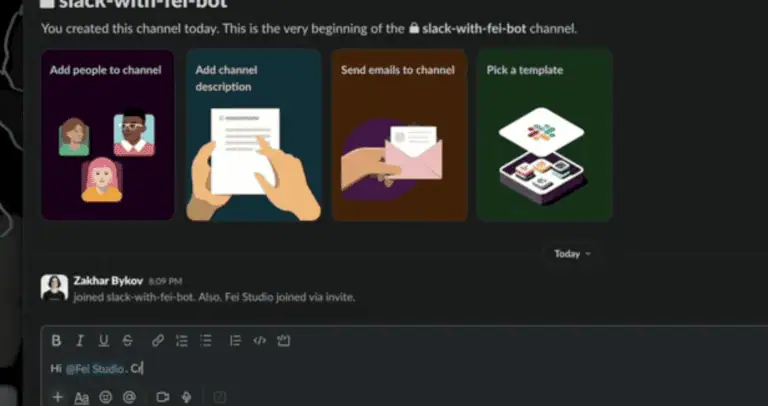
Quick fixes die in Slack threads because the process around them costs more than the fix. Now you can @mention AutonomyAI Studio and the task starts right there. Your engineers still review and merge.

A high-intent user points out a misaligned button, an outdated pricing label, a missing onboarding tooltip. The fix takes five minutes in Figma. Getting it live takes a Jira ticket,

Every software services company runs on the same equation. Engineers are expensive, client timelines are fixed, and margin is whatever's left between the two. Who does which work is a

James Touhey has led design for 20+ years. At AnyTeam, he now ships his own fixes as PRs his engineers review. His story, in his words.

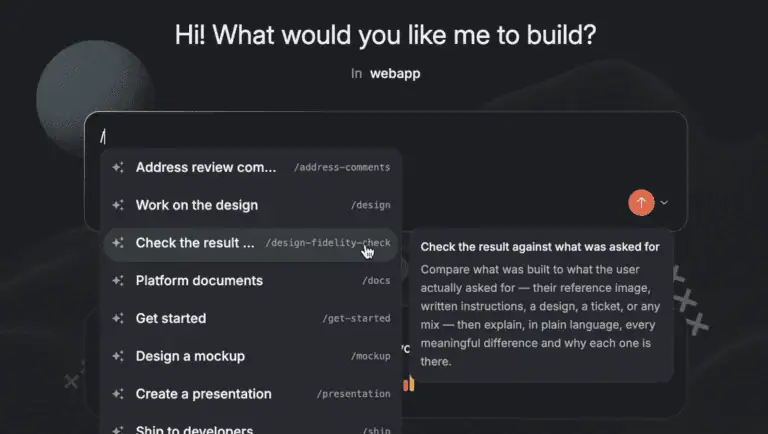
Skills are live in Fei Studio. Pick a specific job—design a screen, make mockups, review your work, or open a PR—type / and Fei does it, anchored to your real codebase. Here's how Skills work.

The bottleneck was never writing the code. It's the queue every change has to funnel through. AI made generating code roughly ten times faster. Shipping barely moved. That gap is

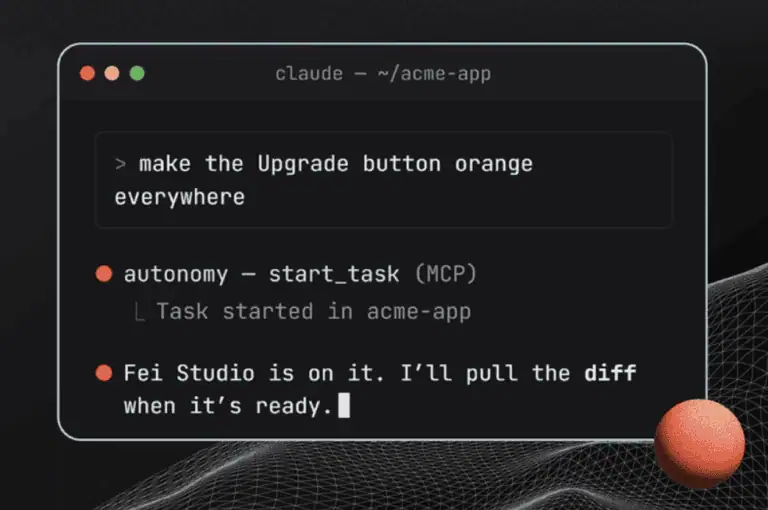
Already living in Claude Code? Here's what adding the Autonomy MCP actually gets you: the part after the code, a change that renders, that your PM can approve, and that your engineers can merge with confidence, without leaving the tool you're already in.

AutonomyAI Studio builds fast. The friction is in the gaps between requests, waiting for one to finish, losing the next idea before you can type it. Two new features close

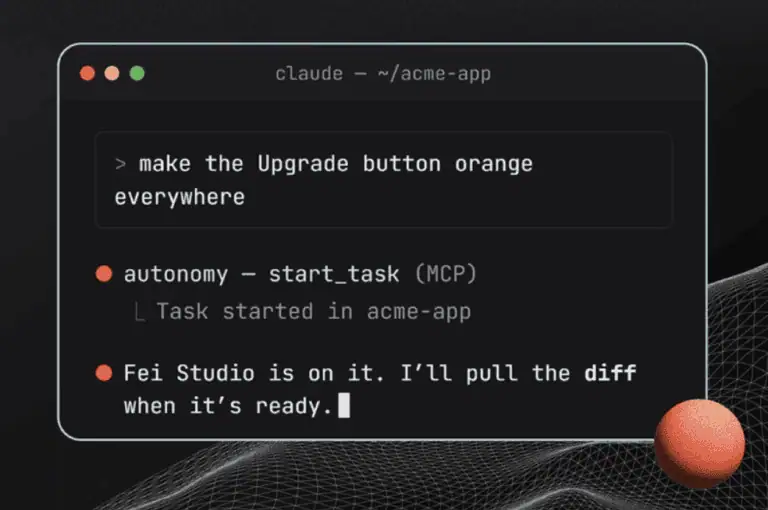
Fei Studio now connects to Claude Code, Claude Desktop, Cursor, and any MCP-speaking agent. Ask for a change in the chat you already have open, and Fei Studio ships it in your production codebase — same components, same review process, same guardrails.